


International Conference in Honor of Adi Ophir’s Life Work
Thinking this Time
June 20-21, 2026
Catholic Academy in Berlin
Thinking this Time
International Conference in Honor of Adi Ophir’s Life Work
June 20-21, 2026
Catholic Academy in Berlin
This conference honors the intellectual life and work of Adi Ophir, whose scholarship has profoundly shaped contemporary debates in political philosophy, critical theory, and the study of Israel/Palestine. Across several decades, Ophir has developed a distinctive mode of critique that interrogates the foundations of modern political order—its regimes of sovereignty, its moral vocabularies, and the forms of violence they authorize and conceal. His work moves between philosophy, historical analysis, and public intervention, offering a powerful example of engaged critical thought.
Bringing together scholars from philosophy, political theory, Jewish studies, and related fields, the conference will reflect on the many dimensions of Ophir’s intellectual legacy: his analyses of political theology and the modern state, his contributions to critical Israeli thought, his reflections on catastrophe and responsibility, and his role in shaping new forms of scholarly and political engagement. Through these conversations, the gathering aims not only to assess the significance of Ophir’s work but also to explore how his critical project continues to illuminate some of the most urgent political and ethical questions of our time.
Organisation
Elad Lapidot
Cooperation
In cooperation with Brown University and the University of Lille
Participants

Abed Azzam taught philosophy at various universities In Germany and the US. he is currently affiliated with Mada al-Carmel – The Arab Center for Applied Social Research, Haifa. He is the author of Nietzsche versus Paul, Columbia UP, 2015
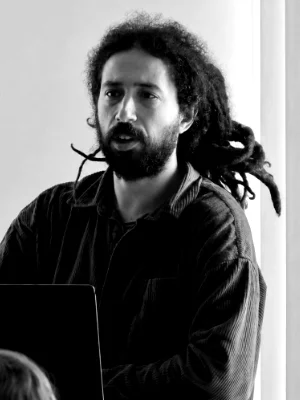
Sidar Bayram is an audiovisual media and archive researcher based in Istanbul. His dissertation, Rewinding the Tape, Rearranging the Focus: Videowork, Visual Archives, and Matters of Justice in Turkey, interrogates how video, as an audiovisual technology, has shaped the production of public truth, counter-forensic practices of material witnessing, and non-governmental forms of archiving concerning violence and violations in Turkey since the 1990s. His research practice focuses on how media-material infrastructures and practices transform the structure of public reality and truth-claiming in contexts of sociopolitical conflicts. He works on material culture, media archaeology, archiving practices, forensics, audio-visual forms of knowledge, infrastructures, investigative aesthetics, and the sociology of emotions. He publishes and translates books and articles in these research areas.
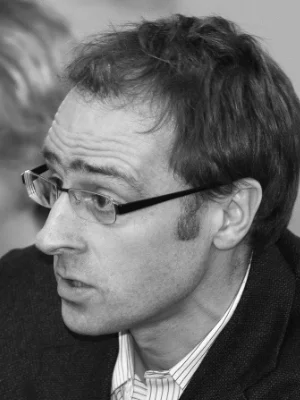
Timothy Bewes is Owen F. Walker Professor of Humanities and Professor of English at Brown University. His most recent books include The Event of Postcolonial Shame (2011), and Free Indirect: The Novel in a Postfictional Age (2022), which won the National Book Critics Circle award in the criticism category. He is a member of the Political Concepts organizing committee at Brown University, and on the editorial board of the Political Concepts journal.
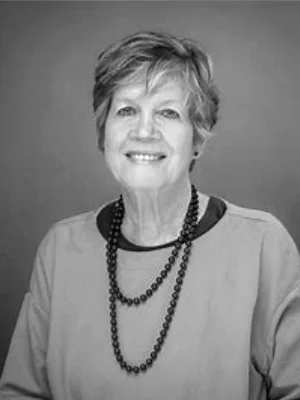
Anat Biletzki is the Albert Schweitzer Professor of Philosophy at Quinnipiac University in Connecticut, USA, having been a long-time professor in the Philosophy Department at Tel Aviv University. Her two most recent publications are Philosophy of Human Rights: A Systematic Introduction (Routledge, 2019) and the co-edited collection Wittgenstein and Democratic Politics: Language, Dialogue and Political Forms of Life (Routledge, 2025). Predictably, the distressed attempt to make politics and philosophy (of language) hang together has been the constant theme of her scholarly and activist life.
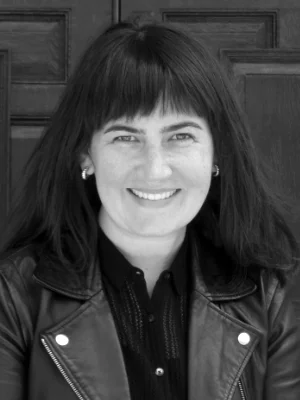
Kate Elizabeth Creasey is a Ph.D. candidate in the Department of History at Brown University. She holds a B.A. from the University of Toronto, an M.A. from Istanbul Bilgi University, and an M.A. from Brown University. She is an intellectual and cultural historian of the Modern Middle East who specializes in contemporary Turkey. Her current project titled “The Unspeakable Years: Militarism, Neoliberalism, and Left Resistance in Late Cold War Turkey” studies anti-left counterinsurgency and the instantiation of neoliberalism in the aftermath of the 1980 coup d’état. In her work Kate pays particular attention to how people from social democratic and left movements that flourished in the 1970s before the coup d’état worked to preserve- often at great risk- the imaginaries of different possible futures in the face of violent state repression. In doing so Kate connects this period in the history of Turkey to the 1979 moment in the Middle East and larger histories of the late Cold War in the Global South. She has published in Review of Middle East Studies, International Labour and Working-Class History, The European Review of Books, and Bülent Journal.
Yoad Eliaz is a researcher of Zionism and a lecturer in the Department of Education at the Emek Yezreel College, Israel.
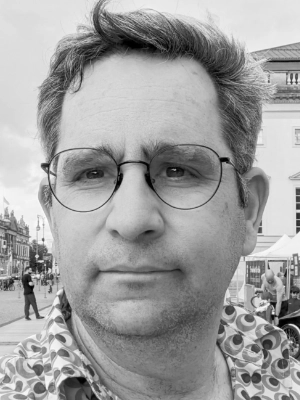
Amir Engel teaches at the German department at the Hebrew University. He studied philosophy, literature, and culture studies at the Hebrew University and completed his PhD. in the German Studies department at Stanford University. He also taught and conducted research at the Goethe University in Frankfurt am Main. His works are in the field of German Jewish literature and intellectual history.
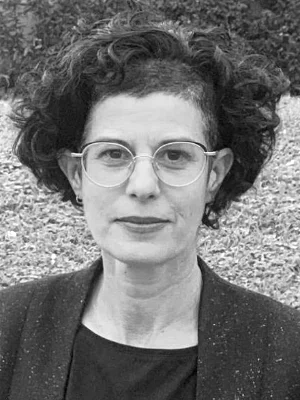
Michal Givoni is a Senior Lecturer in the department of Politics and Government at Ben Gurion University and currently a Humboldt Fellow at the CRC Affective Societies at Freie Universität Berlin. She is the author of *The Care of the Witness: A Contemporary History of Testimony in Crises* (Cambridge University Press, 2016) and *Future Past: A Theoretical Guide for Living the Impasse* (Pardes, 2023; in Hebrew), and the co-editor, together with Adi Ophir and Sari Hanafi, of *The Power of Inclusive Exclusion: Anatomy of Israeli Rule in the Occupied Palestinian Territories* (Zone Books, 2009).
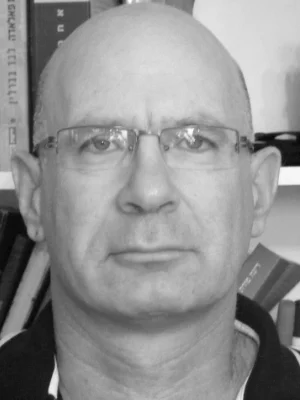
Amos Goldberg Amos Goldberg teaches Holocaust and genocide histories at the Hebrew University of Jerusalem. Part of his work focuses on the Jewish experience in the Holocaust and part of it on Holocaust memory and historiography. Together with Bashir Bashir he co-edited the volume The Holocaust and the Nakba: A New Grammar of Trauma and History, (Columbia University Press 2018). His 2024 Hebrew book וזכרת And you shall Remember: Five Critical Readings in Holocaust Memory is a critique of mainstream Israeli Holocaust memory culture and suggests a binational Palestinian -Israeli memory. A revised and updated version of this book will be published in 2027 by Verso. Goldberg is among the initiators and drafters of the Jerusalem Declaration of Antisemitism. In April 2024 he wrote the article “yes it is genocide” – the first article in Hebrew to acknowledge what was happening in Gaza as genocide. Since October 2023 he has been active in protective presence in Palestinian communities in the Jordan Valley.
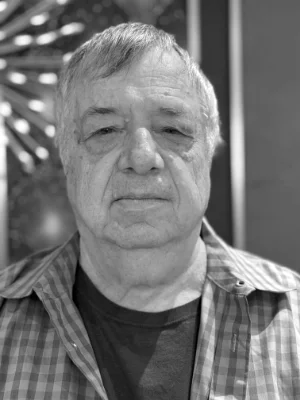
Hannan Hever is the Jacob and Hilda Blaustein Professor of Hebrew Language and Literature at Yale University and Emeritus Professor at the Hebrew University of Jerusalem. As both a historian and interpreter of Hebrew literature, Hever is recognized as a leading scholar in the political, post-national, and postcolonial analysis of Hebrew literary history. His research encompasses various periods in the history of Hebrew literature, ranging from Hasidism and the Enlightenment to contemporary times. His book *The Narrative and the Nation* (2007) offers a new paradigm for the critical reading of the national canon of Hebrew literature. In *Suddenly the Sight of War: Violence and Nationalism in Hebrew Poetry of the 1940s* (Stanford UP, 2016), Hever examines the intersections of war, violence, and post-nationalism in Hebrew poetry related to the Holocaust and the War of Independence. He is affiliated with the Program of Judaic Studies and co-editor of Jerusalem Studies in Hebrew Literature.
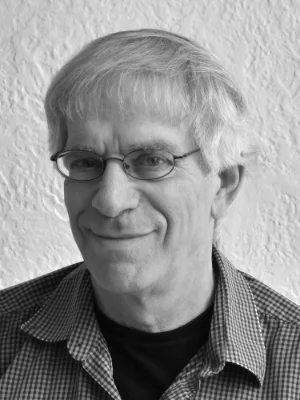
Nahum Karlinsky is a retired faculty member of Ben-Gurion University and, since 2011, has served as a visiting associate professor at Boston University’s Elie Wiesel Center for Jewish Studies. His most recent books include The Lost Orchard: The Palestinian-Arab Citrus Industry, 1850–1950 (with Mustafa Kabha; Syracuse University Press, 2021; extended Hebrew edition, Resling, December 2024), and The Modern Israeli and Palestinian Diasporas: A Comparative Approach (editor; University of Texas Press, December 2024). He is currently examining the impact of Israel’s ongoing, and non-voluntary, process of military and territorial decolonization, initiated by the 1973 war, on the fragmentation and eventual disintegration of Israel and its society.

Hagar Kotef is a professor for political theory in the Department of Politics and International Studies, SOAS, University of London. Her most recent book, The Colonizing Self: Or, Home and Homelessness in Israel/Palestine was published with Duke University Press in 2020 and won the Spitz Prize, the C.B. Macpherson Award, and the Yale H. Ferguson Award. Her first book, Movement and the Ordering of Freedom was published with Duke in 2015. Kotef is the co-editor of Theory\&Event
Aim Deuelle Luski is a philosopher, artist, and political activist. He has taught at the Tel Aviv University, the Bezalel Academy of Arts and Design, and the Hamidrasha School of Art, Beit Berl College. His current research project, The Critique of Yehovistic Reason, is nearing completion and is scheduled for publication by Carmel Publishing House in Jerusalem.
His most recent book, Post-Moralist Philosophy in Its Own Mirror (Ha-Philosophia ha-Post-Musranit Be-Re’i Atzmah), was published in 2016 by Zmora-Bitan Dvir Publishing House. His latest major solo exhibition was held at the Bat Yam Museum of Art in 2015 and was curated by Ariella Aïsha Azoulay.
Luski’s work moves between philosophy, visual culture, and artistic practice, with a particular focus on the intersections of biblical conceptual thought, contemporary French philosophy and image theory, and the contemporary post-colonilal thinkers. His recent research explores the conceptual and linguistic structures of the Hebrew Bible through dialogue with modern and contemporary philosophy.
Itamar Mann is an associate professor of Law at the University of Haifa and a research fellow at Humboldt University in Berlin. He teaches international law and related courses, including an elective on law and terrorism, environmental law, and a clinical seminar. Before moving to Haifa, he was the national security law fellow and an adjunct professor at Georgetown Law Center. He holds an LLB from Tel Aviv University, and LLM and JSD degrees from Yale Law School. Mann is also the president of Border Forensics, a Geneva-based investigation group. His book *Humanity at Sea: Maritime Migration and the Foundations of International Law* was published by Cambridge University Press in 2016. His research focuses on international law and political theory, with particular attention to refugee and migration law, and he provides pro-bono consultancy to several human rights organizations.
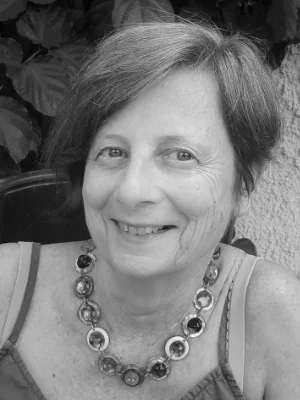
Anat Matar is a retired senior lecturer in philosophy, at the Department of Philosophy, Tel Aviv University, and a political activist. Her main academic interests are political philosophy and the philosophy of language, with special emphasis on the philosophies of Ludwig Wittgenstein, Michael Dummett, Jacques Derrida and Jean-François Lyotard. Her political activities are mainly with the movements in support of draft refusal, the support of Palestinian political prisoners, the Left in academia (with the organization Academia-for-Equality) and protective presence in villages at the West Bank. Her most recent book is The Poverty of Ethics (Verso, 2019).
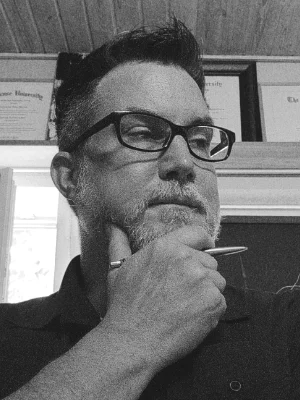
Austin McNeill Brown is an interdisciplinary social scientist, social worker, and educator. He has a PhD from the Mawell School for Public Affairs at Syracuse University and a masters degree in transformative social work from the University of Vermont. His work spans a range of topics related to critical theory, political economy, public health, recovery science, and subjectivity. He currently resides in Denmark where he teaches political theory and global challenges at the an internation folk school in addition to running his own counselling practice specializing in existential therapy.
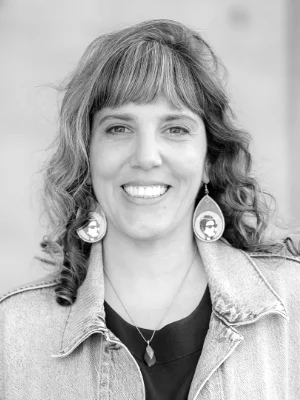
Liron Mor is Associate Professor of Comparative Literature and Director of Critical Theory at the University of California, Irvine. Her book, *Conflicts: The Poetics and Politics of Palestine-Israel*, was published by Fordham University Press in 2024. Mor’s interdisciplinary research spans the fields of critical and political theory, Hebrew and Arabic literatures, translation and visual studies, and critiques of law, conflict, and colonialism. Her publications have appeared in such venues as *Comparative Literature, Arab Studies Journal, Theory & Event, Palestine-Israel Review, Qui Parle*, and *Diacritics*. Mor is currently working on a second book project that examines intentionality as a rhetorical, political, and legal technology of dispossession and racialization as experienced by both Palestinians and Mizrahi Jews.
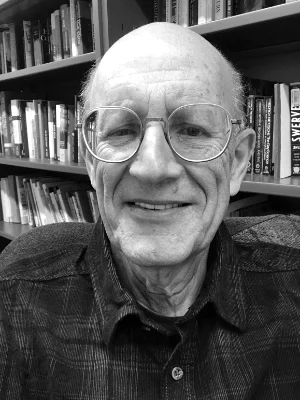
Adi M. Ophir is professor emeritus at Tel Aviv University and a visiting professor at the Cogut Institute for the Humanities and the program for Middle East Studies at Brown University. Among his books: In the Beginning was the State: Divine Violence in the Hebrew Bible (Fordham University Press 2023); On Ruling Power (Hebrew Al Ha-shilton, Resling 2022), and The Order of Evils: Toward an Ontology of Morals (Zone Books 2005); with Ishay Rosen Zvi, Goy: Israel’s Multiple Others and the Birth of the Gentile (Oxford 2018), and From Holy Goy to Sabbes Goy (Hebrew, Carmel 2021); and with Ariella Azoulay, The One State Condition: Democracy and Occupation between the River and the Sea (California University Press 2012). Ophir is also founding editor of the review Theory and Criticism (The Van Leer Institute 1991), and Mafteakh: online Lexical Review for Political Thought (Tel Aviv University 2010).
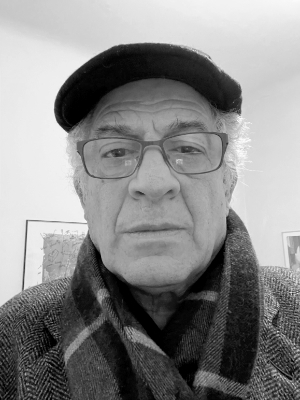
Amnon Raz-Krakotzkin teaches at the department of Jewish history, Ben-Gurion University of the Negev. He was a fellow at the Wissenschaftskolleg zu Berlin and at the Katz Center for Advanced Judaic Studies in Philadelphia. He is a member of the Kollegium of Eume since its beginning. Among his publications: The Censor, the Editor and the Text: Catholic Censorship and Hebrew Literature in the Sixteenth Century (University of Pennsylvania Press, 2007).
Thangam Ravindranathan is Professor of French and Francophone Studies at Brown University. She is the author of *Behold an Animal: Four Exorbitant Readings* (Northwestern UP, January 2020); *Donner le change: L’impensé animal* (with Antoine Traisnel, Éditions Hermann, 2016) and *Là où je ne suis pas: récits de dévoyage* (Presses Universitaires de Vincennes, 2012). Her forthcoming book discusses matter and metabolism in the novel. She has participated in three editions of Political Concepts, with the concepts “Missing,” “Elephant,” and “Dormancy”.
Ishay Rosen-Zvi teaches rabbinic literature in the Department of Jewish Philosophy and Talmud at Tel Aviv University and is a research fellow at the Shalom Hartman Institute in Jerusalem. He is a fellow of the American Academy of Arts and Sciences.
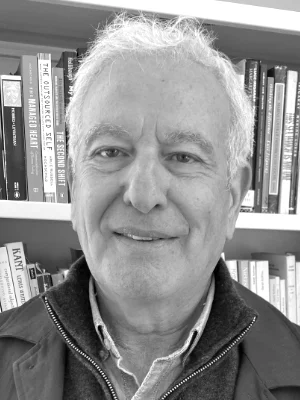
Raphael (Raphi) Sassower is professor of philosophy at the University of Colorado, Colorado Springs. His latest book *Manorial Capitalism, Enslavement, and the Logic of Dividuation* was published by Routledge in 2025. He’s working now on a book that critically examines the relationship between the State and Capital and the conditions for their constitutive demise. Born in Israel to German refugees, he immigrated to the United States in 1977, and once naturalized given up his Israeli citizenship.
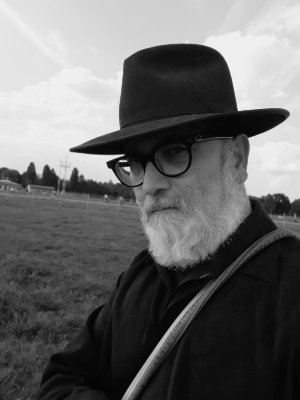
Oded Schechter is a philosopher and talmudist. He lives in Berlin and is the co-founder of the Berlin Makhloykes Center.
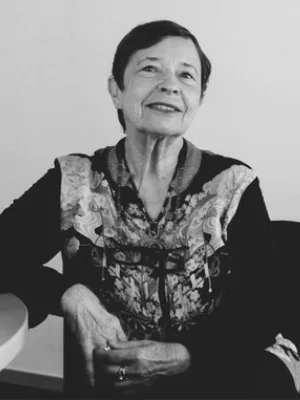
Gabriele M. Schwab is Distinguished Professor Emerita at the University of California, Irvine with appointments in Comparative Literature and Anthropology. She received her Ph.D. at the University of Constance in 1976 and a Ph.D. in Psychoanalysis from the New Center for Psychoanalysis in LA in 2009. A recipient of a Guggenheim Fellowship and a Heisenberg Fellowship, her work ranges across critical theory, psychoanalysis, trauma studies, ecology, anthropology, and 20 th – and 21 st century comparative literatures. Monographs in English include Subjects Without Selves (1994); The Mirror and the Killer-Queen (1996); Haunting Legacies (2010); Imaginary Ethnographies (2012.Winner of the 2014 Choice Award for Best Academic Book); Radioactive Ghosts (2020); Moments for Nothing: Samuel Beckett and the End Times (2023) She is completing a new book titled Haunted Ecologies and is working on two news projects, one on The Psychology of Evil and one on Transspecies Imaginaries.
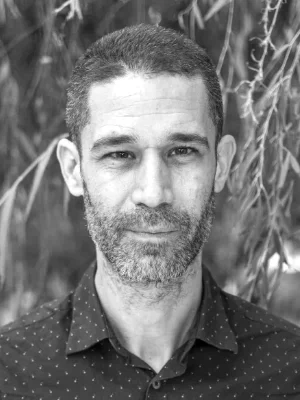
Dr. Shaul Setter is a lecturer and writer in the fields of art, literature, and theory. He writes on the relationship between aesthetics and politics in emancipatory and reactionary projects between Europe and the Middle East. His book on Jean-Luc Godard, Jean Genet, and the Palestinian struggle in the 1970s was published in 2021. He is the head of the he MA program in Policy and Theory of the Arts at Bezalel Academy of Arts and Design, and the editor of “Theory and Criticism” at the Van Leer Jerusalem Institute
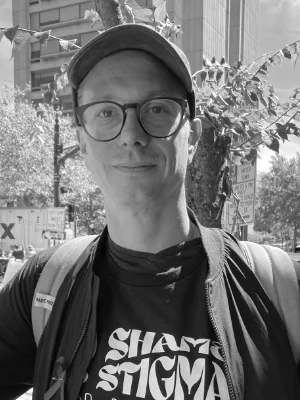
Jon Soske is a public health researcher and designer whose work focuses on how healthcare systems function—and fail to function—for structurally vulnerable populations. After leaving a teaching position at McGill University early in recovery from alcohol and drug addiction, he worked for two years as an outreach worker at a grassroots recovery organization before accepting the position of acting research director at the Brown University Health Transitions Clinic. There, he collaborated with a team of formerly-incarcerated community health workers to develop a research program on the institutional conditions that make care possible or impossible care for people navigating addiction, criminal-legal involvement, and housing instability. Based on this work and his own experience of addiction, he is currently working on a book entitled *The Ethics of the Guilty*: a reflection on the moral obligations—both individual and collective—that arise from having caused irreparable harm.
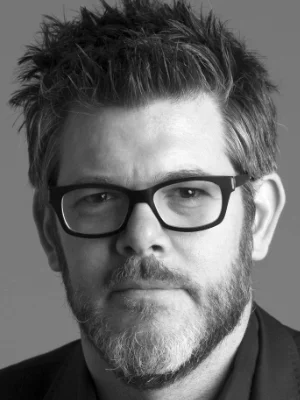
Guy Weinberger is an independent philosopher based in Berlin. He received his PhD in Philosophy from Freie Universität Berlin, awarded magna cum laude, and holds an MA from the Cohn Institute for the History and Philosophy of Science and Ideas at Tel Aviv University. Both his MA thesis and doctoral dissertation were supervised by Adi Ophir. He was awarded a research fellowship from Boston University. His research focuses on phenomenology, ontology, aesthetics, and continental philosophy, with particular attention to Heidegger, Husserl, and Merleau-Ponty. His current work develops a phenomenological account of appearance, meaning, presencing, and surplus.
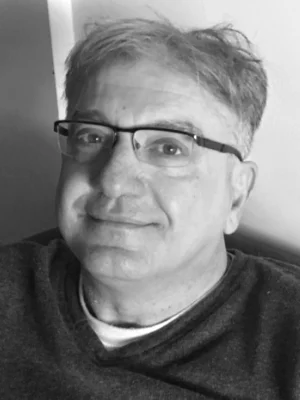
Raef Zreik is Professor of legal and political theory. He teaches at Tel Aviv-Yafa academic college and Ono academic college, and is a senior researcher at the Jerusalem van leer institute. His works and research focuses on intersection of legal and political philosophy, Kantian ethics, critical theory as well issues related to nationalism, Zionism and Palestine- Israel.
Program
| Saturday, June 20 2026 | |
| 09:30–09:45 | Coffee |
| 09:45 | Opening |
| 10:00–11:30 | Roundtable 1: Safa ve-Dibur (Hebrew) Yoad Eliaz (moderator) Oded Schechter Hagar Kotef Anat Biletzki |
| 11:30–12:00 | Coffee Break |
| 12:00–13:30 | Roundtable 2: El ve-Alimut (Hebrew) Aim Deuelle Luski (moderator) Guy Weinberg Elad Lapidot |
| 13:30–15:00 | Lunch Break |
| 15:00–16:30 | Roundtable 3: Yisrael ve-Falastin (English) Liron Mor (moderator) Amos Goldberg Ishay Rosen-Zvi Abed Azzam |
| 16:30–17:00 | Break |
| 17:00–18:30 | Keynote 1 Moderator: Amir Engel Hannan Hever: Without revolutionary theory there can be no revolutionary movement |
| 19:00 | Conference Dinner |
| Sunday, June 21 2026 | |
| 09:30–10:00 | Coffee |
| 10:00–11:30 | Roundtable 4: Teoria ve-Bikoret (English) Shaul Setter (moderator) Itamar Mann Raphael Sassower Nahum Karlinsky |
| 11:30–12:00 | Coffee Break |
| 12:00–13:30 | Roundtable 5: Concepts (English)) Tal Giladi (moderator) Anat Matar Tim Bewes Thangam Ravindranathan |
| 13:30–15:00 | Lunch Break |
| 15:00–17:00 | Roundtable 6: Evil (English) Michal Givoni (moderator) Jon Soske Gabriele Schwab Austin Brown Kate Elizabeth Creasey Sidar Bayram |
| 17:00–17:30 | Break |
| 17:30–19:00 | Keynote 2 Moderator: Zahiye Kundos Raef Zreik: On Evil – Thinking with Adi |
| 19:00 | Adi M. Ophir |