


Workshop
Refiguring Jewish-Christian Dialogue in the Wake of Gaza
June 22–24, 2026
Catholic Academy in Berlin
Image AI
Refiguring Jewish-Christian Dialogue in the Wake of Gaza
Workshop
June 22–24, 2026
Catholic Academy in Berlin
Throughout the destruction of Gaza — and now, with Gaza in ruins, no horizon for reconstruction in sight, and Palestinians in the West Bank facing constant violence — the silence of many Jewish–Christian networks has remained striking. This workshop examines the roots of that silence and the possibilities of dialogue beyond it.
Across Europe and North America, the structures of interreligious dialogue have been decisively shaped by the perceived moral imperative to respond to the Shoah and the legacy of Christian anti-Semitism. While this has led to important theological reconfigurations, it has also produced a discursive framework determined largely by Euro-American concerns.
As Marc H. Ellis has noted, post-Holocaust Jewish–Christian dialogue has often been governed by what he terms an “ecumenical deal”: Christian support for Zionism functioning as the theological price of repentance for anti-Semitism. This arrangement has generated a dominant grammar in which Jewish sovereignty in Israel is sacralized, Palestinian dispossession is marginalized, and solidarity is shaped less by commitments to justice than by a politics of guilt qua an affirmation of Judeo-Christian values.
This workshop interrogates whether such a framework must remain the horizon of Jewish–Christian dialogue, or whether alternative forms might be envisioned. It begins from the recognition that silence regarding Gaza is not a neutral omission but a theologically and politically significant stance. Hence, it seeks to unsettle the dominant post-Holocaust grammar of dialogue and to open space for decolonial, non-Zionist, and otherwise marginalized perspectives.
A further concern is the scope of participation. Historically, Jewish–Christian dialogue has functioned as a bilateral conversation between predominantly Ashkenazi Jews and predominantly white, Western Christians, frequently excluding those whose perspectives are central to the entanglements of theology and geopolitics in the region—such as Arab Christians, Palestinians, and non- or anti-Zionist Jews.
By inviting contributions that critically re-examine the history, structures, and possible futures of Jewish–Christian relations in light of Gaza, this workshop aims to broaden the field of dialogue. It seeks to create room for new modes of solidarity, critique, and theological imagination, asking what it would mean to center not only Jewish–Christian reconciliation but also shared responsibility for settler-colonial violence, racialization, and the enduring logics of Christianity itself.
Organisation
Marianne Moyaert (Faculty of Theology and Religious Studies, KU Leuven)
Elad Lapidot (Université de Lille & Katholische Akademie, Berlin)
Azar Dakwar (Faculty of Theology and Religious Studies, KU Leuven)
Cooperation
The Berlin Center for Intellectual Diaspora in cooperation with KU Leuven and the University of Lille
Program
| Monday, June 22, 2026 | |
| 14:00–15:00 | Marianne Moyaert |
| 15:10–16:00 | Magdalena Dziaczkowska |
| 16:30–17:20 | Michael Azar |
| 17:30–18:20 | Vincent Lloyd |
| Tuesday, June 23, 2026 | |
| 09:30–10:20 | David Neuhaus |
| 10:30–11:20 | Christian Rutishauser |
| 11:50–12:40 | Jamal Daibes |
| 12:50–13:40 | Elena Dini |
| 15:00–15:50 | Atalia Omer |
| 16:00–16:50 | Abeer Khshiboon |
| 17:20–18:10 | Kameron J Carter |
| Wednesday, June 24, 2026 | |
| 09:30–10:20 | Anya Topolski |
| 10:30–11:20 | Benjamin Sax |
| 11:50–12:40 | Santiago Slabodsky |
| 14:00–14:50 | Azar Dakwar |
| 15:00–15:50 | Elad Lapidot |
| 16:00–16:30 | Concluding Discussion |
Participants
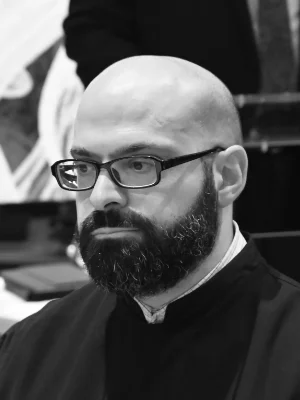
Michael G. Azar, a priest of the Greek Orthodox Archdiocese of America, holds a PhD in New Testament from Fordham University (2013) and an MA in theology from St. Vladimir’s Orthodox Theological Seminary (2005). He is currently Professor of Theology/Religious Studies at the University of Scranton (Pennsylvania), where he teaches classes primarily on the Bible, early Christian-Jewish formation, and Christianity in the Middle East. He is the author of Exegeting the Jews: The Early Reception of the Johannine “Jews” (Brill 2016) as well as several articles related to Christian-Jewish interaction. He is Co-Chair of the Biblical Exegesis from Orthodox Perspectives unit at the Society of Biblical Literature and continues to serve as an advisor to the Orthodox Chair of the Orthodox Christian-Jewish dialogue and as a member of its planning committee.
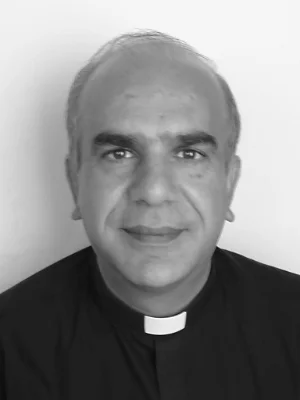
Mgr. Jamal Daibes:
Bishop of Djibouti and Apostolic Administrator of the Diocese of Mogadishu (2024-…)
Born in the Palestinian village of Zababdeh (Jenin) 1964
Ordained priest of the Latin Patriarchate of Jerusalem (1988)
PhD in dogmatic theology from the Pontifical Gregorian University in Rome (1998).
Assistant professor at the Latin Patriarchate Seminary (1998- 2017)
Chairperson of the Department of Religious Studies (2003 – 2013) at Bethlehem University
Associate Professor of Religious Studies at Bethlehem University (2010)
Dean of the Faculty of Arts (2007- 2013) at BU
Canon of the Holy Sepulchre (2008).
John A. Mackay Visiting Professor of World Christianity at Princeton Theological Seminary (Spring 2013).
Rector of the Latin Patriarchate Seminary (2013 – 2017)
Parish priest of the Holy Family Church in Ramallah (2017 – 2021).
Principal of Al-Ahliyya College School in Ramallah (2017 – 2019).
General Director of the Latin Patriarchate Schools (2019- 2021).
General Secretary of the Christian Educational Institutions (2019- 2021).
Former member of the Theological Reflection Committee of the Latin Patriarchate and the Committee of Dialogue with Jews.
Chair of the Local Committee of Friends of the Holy Land (British Christian Charity) (2006 – 2021)
Member of the Ecumenical Committee of the Assembly of Catholic Bishops in the Holy Land.
Member of the Council of Consultors at the Latin Patriarchate of Jerusalem (2004 – 2021).
Patriarchal Vicar of Jordan (September 2021- 2024).
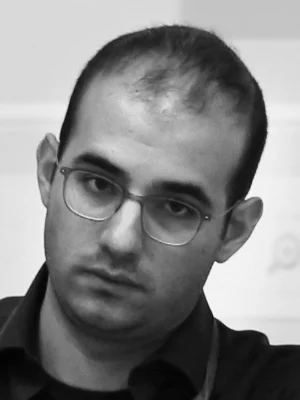
Azar Dakwar is postdoctoral associate at Research Unit Systematic Theology and the study of Religions, the Faculty of Theology and Religious Studies, KU Leuven. He earned his PhD in Political and Social Thought at the University of Kent with a thesis on the critique of the secular analytics of religion. In addition to the politics of Palestine/Israel, his research focuses on critical theories of religion, political theology, post-secularism, and the Christian question.
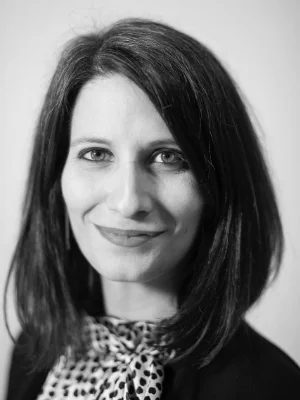
Elena Dini is a PhD candidate at the Pontifical Gregorian University in Rome in the field of interreligious dialogue. Until December 2024 she was the Senior Program Manager of the John Paul II Center for Interreligious Dialogue hosted at the Pontifical University of St. Thomas Aquinas in Rome. Elena offers sessions and workshops on dialogue both locally and internationally and writes on Catholic theology and interreligious dialogue. A Kaiciid Fellow and consultant as well as the convenor of 2 Gingko interfaith Retreats and grant recipient for international projects, she also serves locally as the official liaison with the Muslim communities for the region around Rome (Lazio) at the Italian Bishops’ Conference. Elena is a frequent contributor to L’Osservatore Romano, the Vatican newspaper, for articles related to Muslim-Catholic and Jewish-Catholic dialogue. She holds degrees in Near and Middle Eastern Studies, Communications, Catholic Theology and Interfaith Dialogue.
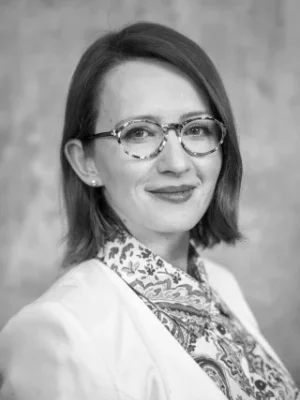
Magdalena Dziaczkowska is a researcher at the Centre for Theology and Religious Studies at Lund University. Her work focuses on Jewish–Christian relations, politics of memory, and interreligious encounters in 20th century Europe, with particular attention to how these are shaped by violence and its aftermaths. She is currently Principal Investigator of a Swedish Research Council–funded international project on Jewish–Catholic intermarriage in Poland before, during, and after the Holocaust (host institutions: KU Leuven, Åbo Akademi University, Norwegian University of Science and Technology, University of Southampton). Dziaczkowska received her PhD from Lund University in 2023 with a dissertation on narrative memory of Jewish–Catholic relations in interwar Poland. She has held research positions at the Hebrew University of Jerusalem (Vidal Sassoon International Centre for the Study of Antisemitism) and has extensive experience researching and teaching across Europe and Israel. Her publications include a forthcoming monograph with Palgrave Macmillan, the co-edited volume Jews in Dialogue (Brill, 2020), and articles on interfaith relations, memory, and the impact of the Gaza war on Jewish–Christian dialogue. She is a member of the Polish Council of Christians and Jews, and since 2016 has been one the Catholic delegates to the Jewish-Catholic Emerging Leadership Conferences.
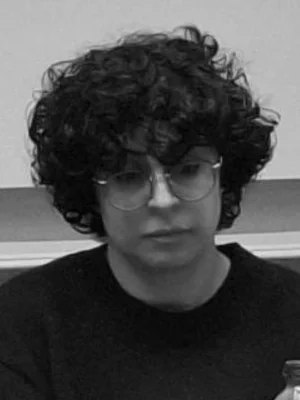
Abeer Khshiboon has recently completed a PhD in Religious Studies at Humboldt University of Berlin. Her dissertation, Present Absentees: Ancestral Trauma, Grief, and Christianity (Masihiya), is a narrative ethnography with internally displaced Palestinians in Galilee. It approaches the Christianity of Palestinians — and more broadly Levantine Arabs — as a local Indigenous knowledge system deserving recognition in its own vernacular: Masihiya.
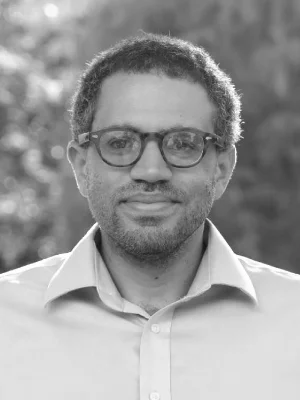
Vincent Lloyd is Professor of Theology and Religious Studies at Villanova University and Leverhulme Visiting Professor at King’s College London. At Villanova, Lloyd directs the Center for Political Theology. Lloyd’s recent books include Black Dignity: The Struggle against Domination (Yale, 2022), the co-authored What Is Political Theology? (Columbia, 2025), and the co-edited Political Theology Reimagined (Duke, 2025).
Marianne Moyaert is Professor of Comparative Theology and the Study of Interreligious Relations at the Faculty of Theology and Religious Studies, KU Leuven (Belgium). She is the author and editor of numerous publications on Christian–Jewish relations, comparative theology, interreligious dialogue, and ritual studies. Her latest monograph is Christian Imaginations of the Religious Other: A History of Religionization (2024), which examines how Christianity has historically constructed and governed religious difference. In her current work she explores the implications of religio-racialization, coloniality, and Christian hegemony for contemporary Jewish–Christian dialogue. This has resulted in her most recent publication “Multilateral Solidarity and the Limits of Comparison: Towards a Decolonial Turn in Jewish-Christian Comparative Theology. A Research Program” (Louvain Studies). She is also co-editor of several volumes, including Interreligious Relations and the Negotiation of Ritual Boundaries: Explorations in Interrituality (2019) and Ritual Participation and Interreligious Dialogue: Boundaries, Transgressions and Innovations (2015, with Joris Geldhof). She currently leads the NWO Vidi project Unequal Partners?, which investigates how Christian–Jewish and Christian–Muslim couples negotiate religious, racial, and secular differences in everyday life.
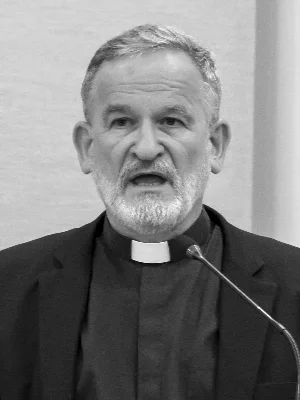
David Mark Neuhaus SJ is a member of the Jesuit community in the Holy Land. He teaches Scripture in various institutions in Israel and Palestine including the Latin Patriarchate Seminary in Beit Jala, Bethlehem University and the Salesian Theological Institute in Jerusalem. He completed a BA, MA and PhD (Political Science) at Hebrew University, Jerusalem and pontifical degrees in theology and Scripture in Paris (Centre Sevres) and Rome (Pontifical Biblical Institute). He is emeritus Latin Patriarchal Vicar for Hebrew Speaking Catholics, Migrants and Asylum Seekers in Israel. He is also a researcher at the Jesuit Institute South Africa. He is the author of numerous books and articles. His latest publications are The Gospel: Different accounts, one message (Paulist Press, 2026) and Conquest or Leaven: Reflections of a Catholic Priest in Palestine/Israel (Orbis Press, 2026).
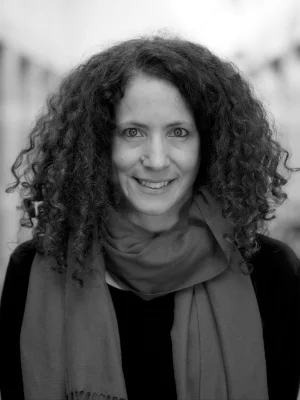
Atalia Omer earned her doctorate at Harvard University with a focus on religion, ethics, and politics. She is a Professor at the University of Notre Dame’s Keough School of Global Affairs and the Kroc Institute for International Peace Studies. Until recently, she served as a senior fellow and the T.J. Dunphy Visiting Professor of religion, Violence, and peacebuilding at the Religion, Conflict, and Peace Initiative at Harvard University. among many other publications, Omer authored Decolonizing Religion and Peacebuilding (Oxford University Press, 2023), When Peace is Not Enough: How the Israeli Peace Camp Thinks about Religion, Nationalism, and Justice (University of Chicago Press, 2015), and Days of Awe: Reimagining Jewishness in Solidarity with Palestinians (University of Chicago Press, 2019). Omer is a co-editor of the Oxford Handbook of Religion, Conflict, and Peacebuilding (Oxford University Press, 2015) and Palestine/Israel Review. Of particular interest to the session today, Omer is the author of an article titled “Turning Palestine into a Terra Nullius: On Amalek and ‘Miracles'” published last year in the Journal of Genocide Research.
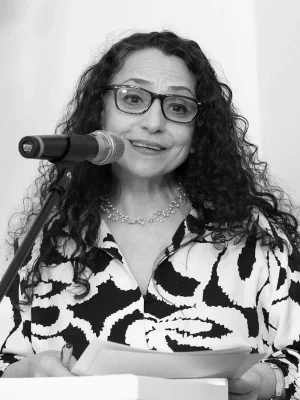
Dr. Viola Raheb was born in Bethlehem, Palestine. She gained her master’s degree in education and Evangelical Theology from the Ruprecht-Karls-University in Heidelberg/ Germany and her PhD in Advanced Theological Studies from the University of Vienna. From 2013-2021 Dr. Raheb was a researcher at the University of Vienna, Faculty of Protestant Theology, Department of the Studies of Religions. She is currently the program director of PRO ORIENTE Foundation, Vienna. Dr. Raheb curator of various programs and initiatives focusing on inter-cultural dialogue, integration and women, peace and security. She is Member of the Austrian Society for Religious Studies and a co-founder of ADAM (Academy for Dialogue Appliance and Mediation). Her work and research centres on contextual theology with focus on Palestine, and ecumenical and interreligious Dialog. Latest publications:
“Instrumentalizing Anti-Semitism in Ecumenical Context”, in Mitri Raheb & Graham McGeoch, “ Theology after Gaza- A global Anthology”, Cascade Books, Eugene- Oregon, 2025. 259-277.
Weltenlage: Gaza, die Welt im Fragment, in Neue Wege, Zürich 5-2025
Raheb, V./Winkel, H. (eds.), Women’s Political Biographies in the MENAT Region. Wien, Bruno-Kreisky-Forum, 2024.
Viola Raheb & Ottmar Fuchs, Heimat im Wort, in,: Moving Home- Bewegte Heimat, Daniel Minch, Norbert Brieden, Jadranka Garmaz, Ottmar Fuchs, Matthias Grünwald Verlag, Ostfilder, 2023. 179-192
“Middle Eastern Theology”, in: Mitri Raheb/Mark A. Lamport (Eds), Emerging Theologies from the global south, Cascade Books, 2023.
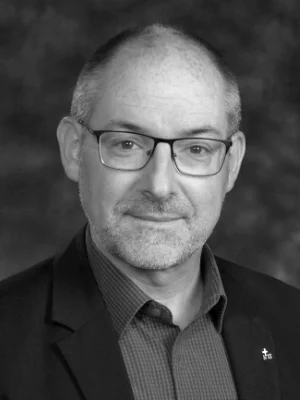
Prof. Dr. Christian M. Rutishauser SJ, Professor for Jewish Studies and Theology and Head of the Institute für Jewish-Christian Research at Lucerne University, Switzerland. Research in history and theology of Jewish-Christian Relations, theology of Eretz Israel/Holy Land, and Jewish philosophy of the 19th and 20th Century; consultor for Judaism at the Holy See and for the German and Swiss Bishops’ Conferences.
Latest book publication: Christian M. Rutishauser/Barbara Schmitz/Jan Woppowa, Jüdisch-christlicher Dialog. Ein Studienhandbuch für Lehre und Praxis, Mohr-Siebeck: Tübingen 2024.
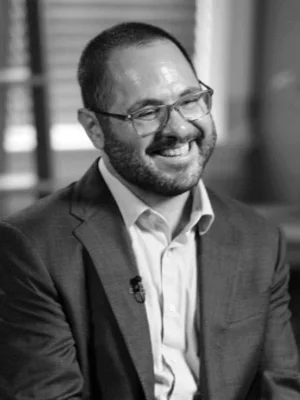
Benjamin Sax serves as the Head of Scholarship and the Jewish Scholar at the Institute for Islamic, Christian, and Jewish Studies in Baltimore. Before arriving at the ICJS, Ben was director of the Malcolm and Diane Rosenberg Program in Judaic Studies and the founding faculty principal at the West Ambler Johnston Residential College at Virginia Tech in Blacksburg, Virginia. In addition to publishing on topics relating to Jewish philosophy, German-Jewish history and culture, Jewish-Christian relations, and interreligious dialogue, Ben has discussed his work on PBS and Baltimore’s NPR affiliate WYPR.
Ben currently serves as the co-chair for the Religion, Holocaust, and Genocide Studies Unit for the American Academy of Religion (AAR); on the steering committee for the Interreligious and Interfaith Studies Program Unit for the American Academy of Religion (AAR); and as president of the Association for Interreligious/Interfaith Studies (AIIS). He serves as a co-editor for the Journal of Ecumenical Studies.
Ben’s most recent book, Winged Words: Benjamin, Rosenzweig, and the Life of Quotation, was published in July, 2023 (Brill). His forthcoming book, Encounters: Dialogue, Antisemitism, and the Israeli-Palestinian Divide, is scheduled for publication by Bloomsbury in October, 2026.

Santiago Slabodsky is an Argentinean social theorist who holds the Florence and Robert Kaufman Endowed Chair in Jewish Studies at Hofstra University in New York. He is co-director of the trilingual journal Decolonial Horizons in Latin America, associate editor of ReOrient: CriticalMuslimStudiesin the UK, and co-editor of the book series Transmodern Times: SouthernLenses,Racial/Religious Interrogations and Geopolitical Contestation for Rutgers University Press in the US. Among his publications, his book Decolonial Judaism: Triumphal FailuresofBarbaric Thinking received the Frantz Fanon Outstanding Book Award from the Caribbean Philosophical Association. He has also held concurrent visiting professorships at institutions in Spain, South Africa, Costa Rica, the Netherlands, Argentina, Canada, North Macedonia, Germany, and Turkey.
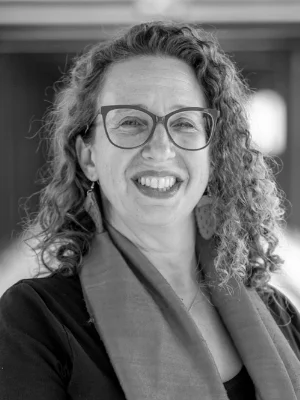
Anya Topolski is an associate professor in ethics and political philosophy at the Radboud University Nijmegen.
She holds a PhD from KU Leuven (2008), awarded the Auschwitz Foundation Prize for her work on Arendt, Levinas, and Jewish thought. In 2009 she worked in the Netherlands on the question of dehumnisation and genocide in relation to Srebrenica.
Her research spans European identity, antisemitism, Islamophobia, genocide, Zionism.
Her current research is in the field of critical philosophy of race and focuses on the race-religion intersection in European
She coordinates the Race, Religion, Secularism Network. Since 2023, she also coordiantes the Race in Academic network. Her books include Arendt, Levinas and a Politics of Relationality (2015) and Is There a Judeo-Christian Tradition? (2016). Recent articles include:
“Good Jew, Bad Jew: ‘Managing’ Europe’s Others. Ethnic and Racial Studies, 2017. “Rejecting the Rhetoric of Uniqueness: The First Step Towards Semitic Solidarity’.” Jewish Philosophical Quarterly, 2020. “The Dangerous Discourse of the ‘Judaeo-Christian’ Myth: Masking the Race–Religion Constellation in Europe.” Patterns of Prejudice (2020). “The Race-Religion Constellation: A European Contribution to the Critical Philosophy of Race.” Critical Philosophy of Race (2018). Unsettling Man in Europe: Wynter and the Race–Religion Constellation (December 2023). And most recently with Margreet Van Es. Antisemitism and Islamophobia in Europe: The Constellation as an Analytic Tool for the Critical Study of Race and Religion. Ethnic and Racial Studies. 2026. She is the founder of Another Jewish Voice (Een Andere Joodse Stem) (Belgie).