


Workshop
Returning to Kanafani’s Haifa
24–25 March,2026
Katholische Akademie in Berlin e.V.
Return to Haifa © Dima Tannir
Returning to Kanafani’s Haifa
Workshop
24–25 March, 2026
Katholische Akademie in Berlin e.V.
Ghassan Kanafani’s novella Returning to Haifa (1969) remains one of the most discussed texts in Palestinian literature. This novella, his last before his assassination, tells the story of a Palestinian couple, Said and Safiyya, who return to their lost home in Haifa twenty years after being forced to flee during the 1948 Nakba. Upon their return, they find that their infant son, Khaldun—left behind in the chaos of their displacement—has been raised by a Holocaust survivor, Miriam, under the name Dov, and now serves as a soldier in the Israeli army.
Set against the aftermath of 1948 and the reverberations of 1967, Returning to Haifa is a story of personal loss and a meditation on historical rupture. The narrative unfolds as a confrontation between past and present and as an encounter between multiple displacements—Nakba and Holocaust, exile and return, memory and erasure. In its tightly woven structure, the novella stages a layered confrontation between competing claims to home, identity, and belonging, prompting the reader to confront unresolved historical traumas without offering the comfort of closure.
Despite the extensive scholarship on the novella, the text still allows further interpretations and contemplation. As Elias Khoury notes, Kanafani’s writing “encapsulates rather than narrates, condenses rather than draws out,” offering dense and multifaceted layers of meaning. While some readings have viewed the text as didactic, closer scrutiny reveals its deep contradictions and complexities, inviting continuous re-examination. Indeed, as Barbara Harlow articulates, Kanafani’s work does not merely present a set of ideological positions but rather “opens these contradictions to a productive analysis which would eventually redefine the borders.” It is in this spirit that we seek to return to Returning to Haifa.
Yet, by situating the novella as our point of departure, the workshop also goes beyond it, examining the afterlives and adaptations but also the debates, inconsistencies, and opposing perspectives the reading of the novella invites. What is more, we wish to ponder: what does it mean to situate Kanafani and this specific text as our focal point at this current moment?
Organisation
Ido Fuchs, Loaay Wattad, and Elad Lapidot
Cooperation
Supported by the Katholische Akademie in Berlin, EUME – Forum Transregionale Studien, Philipps-Universität Marburg, the Department for Romance, Slavic, and Oriental Languages at the University of Lille, and the Berlin Center for Intellectual Diaspora.
Participants
Avigail Ben Dor Niv
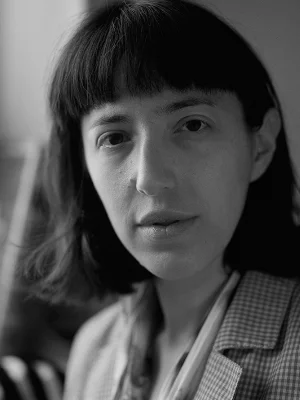
Avigail Ben Dor Niv is a rabbi and a writer, a teacher and a student. She holds two academic degrees in Talmudic studies and serves as a community rabbi in Switzerland. As a rabbi, her work is shaped by the ongoing search for meaning rather than by questions of belief – if the two can, in fact, be separated.
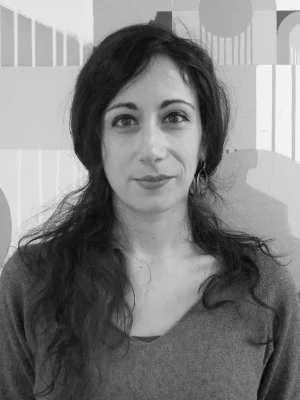
Annamaria Bianco is Assistant Professor (tenure-track) in Modern Arabic Language and Literature at Aix-Marseille University and Associate Researcher at the Institut français du Proche-Orient (Ifpo-DEAMM). Her research focuses on contemporary Arabic literature, translation, adaptation, estrangement and exile. She co-edited the volumes Contemporary Arabic Literature and Migration: New Poetics and Perspectives (Bloomsbury, 2026) and Exil et traduction. Regards sur un croisement fécond (Classiques Garnier, 2024).
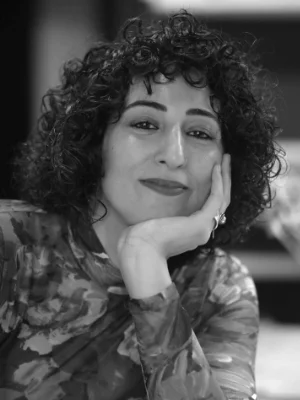
Yasmeen Daher is a postdoctoral fellow with the International Research Group on Authoritarianism and Counter-Strategies (IRGAC) at the University of Potsdam. She holds a PhD in Philosophy from the University of Montreal. Her research intersects political theory, ethics, and direct action, grounded in a commitment to feminist, social, and anti-colonial movements. Previously, she held teaching positions at various institutions, including Birzeit University and the Simone de Beauvoir Institute.
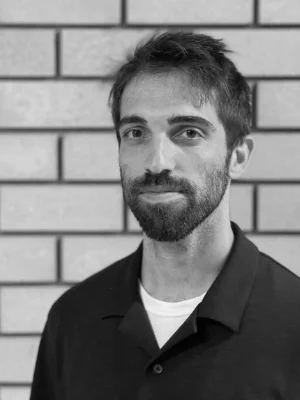
Ido Fuchs is an affiliated EUME doctoral Fellow at the Forum Transregionale Studien and recently submitted his dissertation on the poetics of return in Palestinian literature at the Program for Comparative Literature at Tel Aviv University. In 2026, Fuchs will join the Affective Societies Collaborative Research Center at the Freie Universität Berlin as a postdoctoral fellow. His works have appeared or are forthcoming in journals such as Interventions, Biography, Journal of Middle Eastern Women’s Studies, and Theoretical Practice.
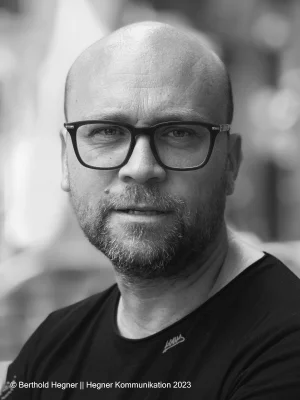
Christian Junge is a senior lecturer in the field of modern Arabic literature and culture at the Center for Near and Middle Eastern Studies at Marburg University. He received his PhD from Freie University Berlin on literature and language in the work of in the work of al-Shidyāq (d. 1887). His recent book project “Affective Readings” deals with emotions and affects in contemporary Egyptian literature from 1990 to 2020. His latest publications include “Tarab: Sonic Affects” in PMLA. In addition, he is co-director of the international programm „Arabic Philologies“ and Principle Investigator of the Merian Center for Advanced Studies in the Maghreb (MECAM).
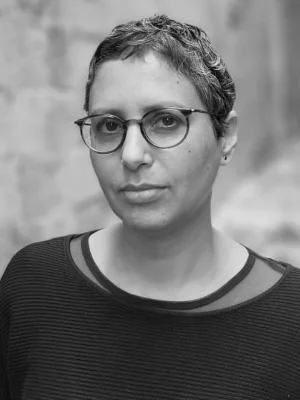
Zahiye Kundos is a scholar of modern Arabic and Islamic Studies. She specializes in modern Islam, Arabic literature, and the Nahḍa, the modern Arabic intellectual and cultural history. She is currently a lecturer at the Barenboim-Said Academy in Berlin and a research associate at the Simon Dubnow Institute in Leipzig.
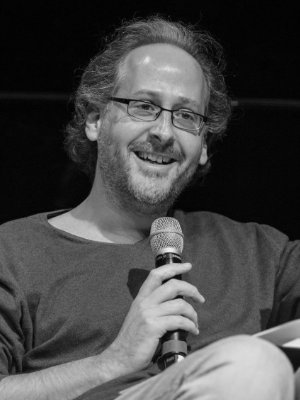
Elad Lapidot is professor for Culture Studies at the University of Lille, France. He specializes in philosophy, Jewish thought and Talmud and was teaching at the University of Bern, Switzerland, the Humboldt Universität Berlin and the Freie Universität Berlin. His work is guided by questions concerning the relation between knowledge and politics. Among his publications: Jews Out of the Question. A Critique of Anti-Anti-Semitism (SUNY Press, 2020), Hebrew translation with introduction and commentary of Hegel’s Phänomenologie des Geistes, Vol. 1 (Resling, 2020), Heidegger and Jewish Thought. Difficult Others, (Rowman & Littlefield, 2018), and Etre sans mot dire : La logiqe de ‘Sein und Zeit’ (Zeta Books, 2010).
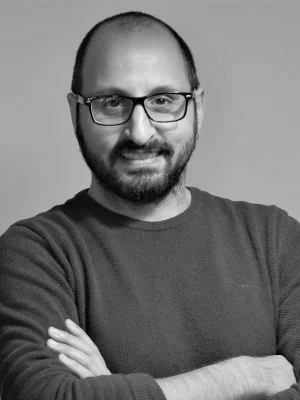
Manar H. Makhoul is a Lecturer in Arabic and Islamic Studies at Tel Aviv University and co-editor of Mafteakh–Muftah: Lexical Review of Political Thought. He holds a PhD in Asian and Middle Eastern Studies from the University of Cambridge. His research and teaching focus on Palestinian literature, identity, and intellectual history, with a particular interest in post-2010 transformations. His book Palestinian Citizens in Israel: A History Through Fiction, 1948–2010 was published by Edinburgh University Press in 2020.
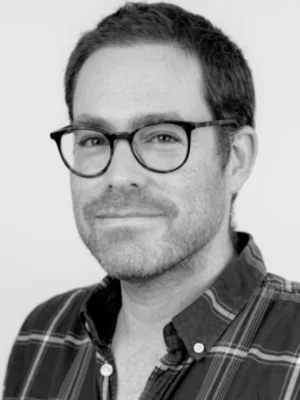
Eli Osheroff is a historian of the modern Middle East, with a focus on Arab political and intellectual history and the Arab-Zionist conflict. He holds a PhD from the Hebrew University of Jerusalem and was a postdoctoral fellow at the Truman Institute, at the Jacob Robinson Institute at the Hebrew University, and in the Dan David Society of Fellows at Tel Aviv University. In the academic year 2025/26, he is a EUME Fellow at the Forum Transregionale Studien. His first book, forthcoming from the Van Leer Institute, examines Arab political imagination from the late Ottoman period to 1948. Eli’s articles have appeared in the British Journal of Middle Eastern Studies, Israel-Palestine Review, and other venues.
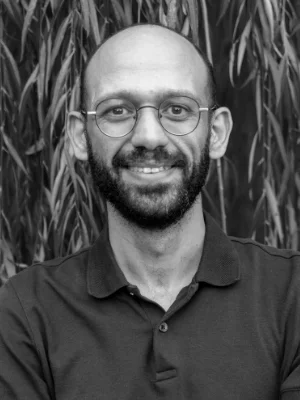
Loaay Wattad is a sociologist of literature and a scholar of Palestinian children’s literature. He is a Minerva Postdoctoral Fellow at Freie Universität Berlin and an affiliated researcher at the Forum Transregionale Studien (EUME). His research examines political imagination, unhomeliness, and structures of dispossession in Palestinian and Israeli children’s literature.
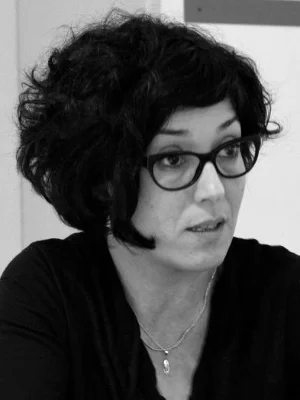
Himmat Zoubi is an urban sociologist and feminist activist. She serves as a Research Associate at Mada al-Carmel – the Arab Center for Applied Social Research in Haifa, a Postdoctoral Fellow in the “Europe in the Middle East – the Middle East in Europe” (EUME) program in Berlin, and a Senior Fellow at the Institute for Palestine Studies. She holds a PhD in Sociology and two MA degrees in Criminology and Gender Studies. Her scholarship examines settler colonialism and its entanglements with urban formations. Her work critically engages with processes of (De/Re)urbanization in Palestine and explores the interrelations among space, knowledge, and politics. More recently, her research has turned to questions of cities and neoliberalism, and to culture and art as both instruments of colonial governance and generative spaces for resistance and political imagination.
Program
| Tuesday, 24 March 2026 | |
| 14:30–15:00 | Brief Welcome and Introduction Coffee Break – Info-Eck, 3rd Floor |
| 15:00–16:30 | Session I – Comparing Returns Manar Makhoul – Who Tells the Story? Re-reading Returning to Haifa through The Pessoptimist Eli Osheroff – Refugeeness, Decolonization, and Belonging in Returning to Haifa Intervention – Yasmeen Daher |
| 16:30 | Coffee Break – Info-Eck, 3rd Floor |
| 17:00–18:30 | Session II – The Thought of Return and the Afterlives of Haifa Elad Lapidot – Kanafani and the Thought of Return / Resistance Literature Annamaria Bianco – Return(s) to Haifa: Adaptation as Transcreation |
| 19:00 | Dinner |
| Wednesday, 25 March 2026 | |
| 09:30–10:00 | Coffee – Info-Eck, 3rd Floor |
| 10:00–11:30 | Workshop Christian Junge Interactive Workshop Session |
| 11:30–12:00 | Coffee Break – Info-Eck, 3rd Floor |
| 12:00-13:30 | Session III – Where Is Home? Loaay Wattad – Returning to Jaffa: Das Unheimlich and the Sociology of Home Avigail Ben-Dor Niv – “Wherever I go, I go to the Land of Israel” Intervention – Himmat Zoubi |
| 13:30-15:00 | Lunch Break – Restaurant |
| 15:00-16:30 | Session IV – Subtle Readings Zahiye Kundos – On the Subtle Transcendental Elements Ido Fuchs – Safiyya’s Silence: Returning from the Margins |
| 16:30-17:00 | Coffee Break – Info-Eck, 3rd Floor |
| 17:00-18:30 | Closing Session – Kanafani Today Roundtable – Kanafani Today Moderated Open Discussion General Discussion and Closing Remarks |