

International Workshop
Workshop on Talmud and Contemporary Thought – Destruction and Renewal
October 8–11, 2026
Paideia – The European Institute for Jewish Studies in Sweden
Workshop on Talmud and Contemporary Thought – Destruction and Renewal
International Workshop
October 8–11, 2026
The Berlin Center for Intellectual Diaspora in cooperation with Södertörn University
and Paideia, The European Institute for Jewish Studies in Sweden
The Workshop on Talmud and Contemporary Thought is an annual intellectual encounter, which explores ways of how the Talmudic tradition of text may offer a medium for contemporary thought, in the sense of thought that engages on issues of contemporary social, political and cultural concern.
The workshop revolves around a Talmudic text, which serves as a medium and environment for thinking together politico-theoretical questions of contemporary concern. The program is based on readings of these texts in view of the guiding questions, which are presented by different participants as a basis for group discussions. A unique feature of the workshop is that it brings together intellectuals with various backgrounds, some more Talmudic, some from other disciplines, in an attempt to enrich conversations and broaden horizons.
The theme for the 2026 workshop is Destruction and Renewal. We would like to reflect, in view of contemporary politics, not the least in Israel/Palestine, of the meaning of large-scale destruction, of lives, of neighborhoods, of civilization, for any intellectual project, especially projects engaged in thinking.
Like war, which was discussed in last year’s workshop, the violence of destruction seems to contradict thought, theory, and any reasoning in general. In view of mass destruction, thinking, discussing and arguing stops making sense, and any attempt of making sense may even seem obscene or complicit. On the other hand, like in the case of war, intellectual language is full with terminology of destroying, undoing, taking apart, deconstructing, unsettling and erasing. If thought is the site of possibilities, thinking necessarily undermines the real.
In what ways thinking not only does not contradict destruction, but constitutes the very dimension where the undoing of existence takes its departure, through ideology or theology, discourse, narrative, policy and commands? In what ways therefore do acts of destruction not silence thought but rather summon it? And how is destruction not only arising from thinking, but also generates thought? Is thinking perhaps the origin not only of destruction but also of the destruction of destruction, that is the site of renewal? And what are the differences and relations between the intellectual positions and possibilities of the destroyed and the destroyers?
The Talmud, as the core text of the rabbinic intellectual tradition, is closely related to destruction. Not only is the rabbinic tradition situated by common historiography in the postbiblical era, within the cultural turns generated after the demise of the Judean Kingdom and the destruction of Jerusalem and of the Second Temple by the Romans. Furthermore, this destruction, the khurban, features as a constitutive myth, ethos and motif within rabbinic literature itself and has shaped both its intellectual and political project through history. In a certain sense, the Talmud arises from destruction.
The talmudic passages chosen for this year’s workshop are accordingly a series of narratives that concern the destruction of Jerusalem, found in tractate Gittin, which are commonly known as “the tales of the destruction,” aggadot ha-khurban. These passages are traditionally studied on Ninth of Av, the annual fasting day commemorating the destruction of the Jerusalem temple.
Participants are invited to present their reading of these passages, engaging with contemporary questions related to the theme of Destruction and Renewal. Presentations should be around 20-30 minutes and serve to open a text-based discussion.
Organisation
Elad Lapidot (Katholische Akademie in Berlin/ University of Lille)
Cooperation
Paideia, The European Institute for Jewish Studies in Sweden in cooperation with The Berlin Center for Intellectual Diaspora and Södertörn University


The Texts
The texts, in original and in English translation, may be found here:
Participants
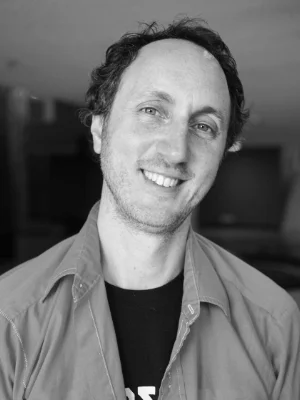
Jacob Blumenfeld is a postdoctoral fellow at the Centre for Social Critique, Humboldt University Berlin, where he co-directs an interdisciplinary research project with Rabea Berfelde on Socialization in Theory and Practice: Democratizing Access to Land and Energy, funded by the Gerda Henkel Foundation. Previously, he was an assistant professor of Practical Philosophy at the Carl von Ossietzky University of Oldenburg and a member of the DFG-funded Collaborative Research Centre SFB 294
Structural Change of Property. He is the author of The Concept of Property in Kant, Fichte, and Hegel: Freedom, Right and Recognition
(Routledge, 2024) and All Things Are Nothing to Me: The Unique Philosophy of Max Stirner (Zero, 2018), and co-editor of Umkämpftes Eigentum: Eine gesellschaftstheoretische Debatte (Suhrkamp, 2025, with Niklas Angebauer and Tilo Wesche). He is currently writing about many topics, including the normative foundations of socialization, the subjective consequences of climate change, democratic ecological planning, the critical theory of Fichte, and the moral philosophy of Günther Anders. At the Centre for Social Critique, he organizes events on Green Capitalism, The Politics of Critical Theory, and Socialization and Social Theory. He earned his PhD at the New School for Social Research in New York.
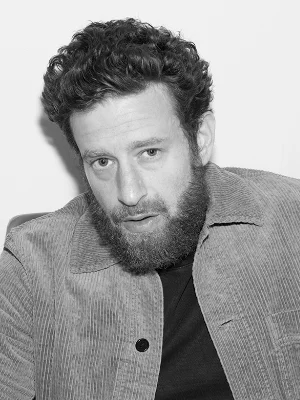
Gabriel Itkes-Sznap is a poet, literary critic and researcher in aesthetics. He holds a PhD from Södertörn University (Stockholm), was a postdoctoral fellow at the Faculty of Fine Arts at The Berlin University of the Arts (UdK Berlin) 2024–2026 and his books include Tolvfingertal (2015), Nollpunkten (2021), Himlen till munnen tången till hjärtat (2021) and Predikaren (2024).
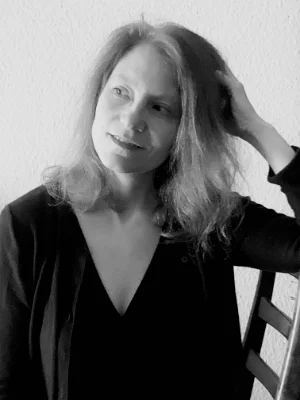
Aurélia Kalisky is a researcher at the Centre Marc Bloch in Berlin. Her research focuses on Holocaust and genocide studies, testimony, memory, and the comparative and transnational study of political violence. She currently co-directs the French-German research project FIMEMO (First Memories and Forms of Knowledge), which examines early testimonies and forms of knowledge produced in the immediate aftermath of the Holocaust and the genocide against the Tutsi in Rwanda.
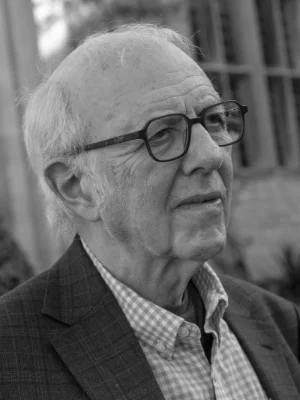
Brian Klug is Hon Fellow in Social Philosophy, Campion Hall, Oxford; Emeritus Fellow of Philosophy, University of Oxford; and Hon. Fellow, Parkes Institute for the Study of Jewish/Non-Jewish Relations, University of Southampton. His books include Being Jewish and Doing Justice, Offence: The Jewish Case, Words of Fire: Selected Essays of Ahad Ha’am (editor) and A Time to Speak Out: Independent Jewish Voices (co-editor). His most recent publication is ‘”Hear, O Israel!”: Rehearing the Shema’ in Ulrich Schmiedel et al, Engaging Werner G. Jeanrond’s Theological Thinking: Starting Points (T&T Clark, 2026). He is a member of the Advisory Board for ‘Political and Public Theologies’ (book series, Brill).
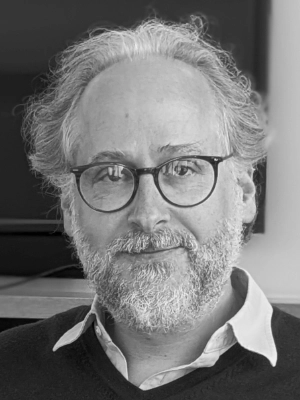
Elad Lapidot is professor for Culture Studies at the University of Lille, France. He specializes in philosophy, Jewish thought and Talmud and was teaching at the University of Bern, Switzerland, the Humboldt Universität Berlin and the Freie Universität Berlin. His work is guided by questions concerning the relation between knowledge and politics. Among his publications: Jews Out of the Question. A Critique of Anti-Anti-Semitism (SUNY Press, 2020), Hebrew translation with introduction and commentary of Hegel’s Phänomenologie des Geistes, Vol. 1 (Resling, 2020), Heidegger and Jewish Thought. Difficult Others, (Rowman & Littlefield, 2018), and Etre sans mot dire : La logiqe de ‘Sein und Zeit’ (Zeta Books, 2010).
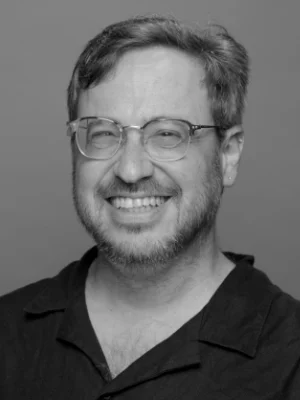
Yair Lipshitz is an Associate Professor at the Department of Theatre Arts in Tel Aviv University, and chair of the department. Starting March 2027, he will be the Torsten Söderberg Professor in Jewish Thought at Uppsala University. His main field of research is the intersections between performance, theatre, and Jewish religious traditions. He is the author of four books: The Holy Tongue, Comedy’s Version (Bar Ilan University Press, 2010; in Hebrew); Embodied Tradition: Theatrical Performances of Jewish Texts (Ben Gurion University Press, 2016; in Hebrew); Theatre & Judaism (Palgrave Macmillan, 2019); and The Messianic Stage: Time and Redemption in Modern Hebrew Theatre (De Gruyter, 2025).

Romane Mrejen is a doctoral student at the University of Lille. Her doctoral project aims to rethink the remnants of destruction, ruins and wreckage, beyond the logic of restoration, in the work of Walter Benjamin. To this end, she turns to Jewish angelology, and in particular the figure of the angel of sabotage.
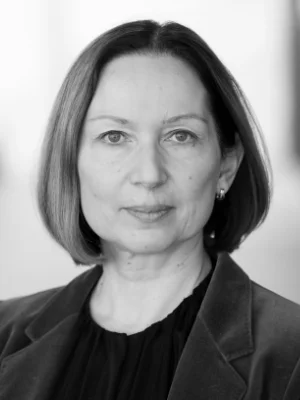
Elena Namli is professor of theological ethics at Uppsala University, Sweden. Her research focuses on social and political ethics. She has published on philosophical as well as on theological ethics. Her publications include volumes Human Rights as Ethics, Politics, and Law (2014), Jewish Thought, Utopia, and Revolution (co-editor 2014), Future(s) of the Revolution and the Reformation (editor 2019), Etik (Ethics, with Carl-Henric Grenholm 2019) Legal Positivism, Politics, and Critical Ethics (2025). Elena Namli is editor in chief for De Ethica.
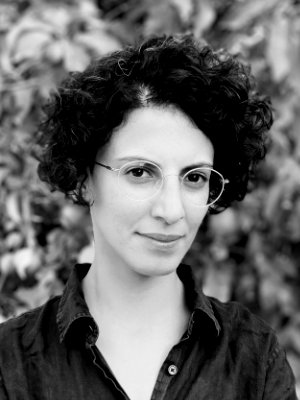
Bat Chen (Laila) Seri is an affiliated researcher at the Centre d’Études en Civilisations, Langues et Lettres Étrangères at the University of Lille and the Buber-Rosenzweig-Institut at Goethe University Frankfurt. She is currently working on the research project “Divine Violence and the Political Hermeneutics of the Talmud”, funded by the Sven och Dagmar Saléns Stiftelse. In 2025, she received a PhD in Philosophy of Religion from Lund University for her dissertation, “In Search of Another Law: Three talmudic Readings of Benjamin’s Kafka”, which brings rabbinic modes of interpretation into dialogue with modern philosophical thought.
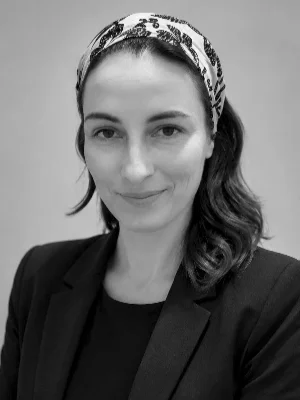
Hannah Tzuberi is a researcher of contemporary Jewry with a special interest in the figure of the Jew in post-Holocaust (German) nation-building. She studied Jewish Studies and Islamic Studies and works as a teacher and school director in Berlin.
Program
| October 8 – Thursday | |
| 14:00 | Meeting at the venue, reception |
| 14:30–16:00 | Introduction Elad Lapidot |
| 16:00–16:30 | Break |
| 16:30–18:00 | Session I Hanna Tzuberi |
| 18:00–18:30 | Break |
| 19:00–20:30 | Public Lecture Brian Klug |
| October 9 – Friday | |
| 09:30–11:00 | Session II Romane Mrejen |
| 11:00–11:30 | Break |
| 11:30–13:00 | Session III Yair Lipshitz |
| 13:00–14:00 | Break |
| 14:00–15:30 | Session IV Laila Seri |
| 15:30–16:00 | Break |
| 16:00–17:30 | Session V Jacob Blumenfeld |
| 17:30–20:00 | Free time |
| October 10 – Saturday | |
| 11:00–12:30 | Session VI Elena Namli |
| 12:30–13:30 | Break |
| 13:30–15:00 | Session VII Gabriel Itkes-Sznap |
| 15:00–15:30 | Break |
| 15:30–17:00 | Session VIII Aurélia Kalisky |
| 17:00–20:00 | Free Time |
| October 11 – Sunday | |
| 09:00–11:00 | Session IX Brian Klug |
| 11:00–11:30 | Break |
| 11:30–12:30 | Open Discussion |
| 12:30–13:30 | Concluding Discussion |